
Smart Ways to Organize Pet Gear Without the Clutter
Last Updated: November 3, 2026
Quick Summary
To organize pet gear, empty every bin and corner, sort items into keep, toss, and donate piles, then return only what your pet actually uses to a labeled home. Group gear by how you use it, such as walking gear together, and store it in clear bins, wall hooks, and a dedicated cabinet.
- Keep only gear your pet used in the last 60 days or genuine seasonal items.
- Group walking gear, grooming supplies, and toys by type rather than by room.
- Use open baskets for toys and sealed bins for treats and chews.
- Build a go-bag with a spare leash, records, food, and medications.
- Run a five-minute weekly reset and a twice-yearly gear check.
Table of Contents
- Start With a Pet Gear Audit: Sort, Declutter, and Donate
- Dog Stuff Organizer Ideas That Actually Work
- Build a Dog Supply Storage Cabinet in Any Space
- DIY Pet Gear Storage You Can Set Up This Weekend
- Pet Supply Station Ideas for Busy Households
- Travel, Seasonal, and Emergency Gear: What to Pack and Where to Store It
- Maintenance Routines That Keep Pet Gear Neat and Tidy
- Shop Pet Storage Essentials at Nexona Mart
- Frequently Asked Questions
Start With a Pet Gear Audit: Sort, Declutter, and Donate
The fastest way to organize pet gear is to empty every bin, closet, and corner onto the floor, sort items into keep, toss, and donate piles, then return only what your pet actually uses to a labeled home.
Most homes accumulate three leashes, a dozen half-chewed toys, and a drawer of expired treats without anyone noticing. The audit fixes that in one afternoon.
The Keep, Toss, and Donate Test
Work through gear category by category, not room by room. Hold each item and ask three questions:
- Keep: Has your pet used it in the last 60 days, or is it a genuine seasonal or emergency item?
- Toss: Is it chewed through, missing parts, expired, or unsafe?
- Donate: Is it clean, functional, and something you simply do not need?
A common mistake is keeping gear "just in case." That spare harness from a dog you no longer own takes up space a working item needs. Be honest with the donate pile.
Dog Stuff Organizer Ideas That Actually Work
The best dog stuff organizer ideas share one principle: group items by how you use them, not by which room they came from. A leash, poop bags, and treats belong together because they leave the house together.
Group by Type, Not by Room
Sort walking gear as one group, grooming supplies as another, and toys as a third. This prevents hunting through three rooms for a single leash. When you choose bins and storage furniture, look for pieces that fit your home's style; aesthetic pet furniture that actually fits a modern home makes that easier.
Bins, Baskets, and Labels That Last
Choose clear or open-top bins for toys so kids and family members can toss items in without a lid fight. Use closed containers for anything that smells, like treats and chews. Label every bin with a word, not a color code nobody remembers.
| Gear Type | Container | Label | Why It Works |
|---|---|---|---|
| Toys and balls | Open basket | "Toys" | Easy drop-in, no lid |
| Leashes and collars | Wall hooks | "Walk" | Grab and go |
| Treats and chews | Sealed bin | "Treats" | Keeps smells in |
| Grooming supplies | Caddy with handle | "Grooming" | Carries to the sink |
| Records and meds | File organizer | "Health" | Protects paperwork |
Build a Dog Supply Storage Cabinet in Any Space
A dog supply storage cabinet is a dedicated vertical unit that holds food, toys, walking gear, and grooming supplies in one place. The goal is a single location your whole household learns to use.
Start with the tallest, narrowest spot you have: a utility closet, hallway end, or garage wall. If your pet gear shares space with your living room, pet-friendly home decor ideas that work with your lifestyle help storage blend in.
Small-Space and Renter-Friendly Options
No drilling and no built-in shelving? Use these instead:
- Over-the-door hanging organizers for leashes and small toys
- Stackable bins that fit under a bed or in a closet corner
- A freestanding shelving unit that moves with you
Watch out: adhesive hooks fail under a wet leash and heavy harness. Keep the heavy stuff on freestanding or screwed-in hardware.
DIY Pet Gear Storage You Can Set Up This Weekend
DIY pet gear storage does not require power tools, a big budget, or a dedicated room. The best weekend projects reuse containers you already own, add one or two inexpensive hardware pieces, and solve a specific problem you identified during your audit.
-
Convert a bookshelf into a pet station. Reserve the lowest shelf for heavy items like food and water, the middle shelf for everyday walking gear, and the top shelf for seasonal or backup supplies. Add labeled bins sized to the shelf depth so nothing overhangs. Anchor the shelf to the wall if you have a climber or a large dog. Watch out: putting food on the bottom shelf next to a water bowl invites moisture and spills, so keep the food bin a shelf above the bowl line.
-
Turn an over-the-door shoe organizer into a gear caddy. Hang it inside a closet door or on the door you use for walks. Use the deep pockets for leashes, poop bags, and brushes, and the shallow pockets for small toys and treat pouches. This works best for lightweight gear; a wet leash or heavy harness will stretch the fabric. Watch out: door organizers can scratch painted doors, so add felt pads behind the hooks if the door finish matters.
-
Repurpose a laundry basket as a toy bin. Line it with a washable cloth or pillowcase, and set it beside the couch or in the room where your pet actually plays. A low, open basket beats a lidded bin because family members will actually use it. Keep chewed toys out so they do not contaminate the clean ones.
-
Build a feeding zone with a waterproof mat. A silicone or rubber mat under bowls contains spills, catches kibble, and protects hardwood. Add a small sealed container for a day's worth of food next to the bowls so you are not hauling the main food bin to the kitchen twice a day. Watch out: a mat with a raised lip traps crumbs and moisture, so wipe it weekly to prevent mold and odor.
-
Make a no-drill leash hook from a tension rod. In a rental or hallway with no studs, a tension rod fitted inside a closet or between two cabinets can hold S-hooks for leashes and a small hanging bag for bags and treats. Test the rod with a light load first; tension rods are not rated for a heavy retractable leash or a full treat pouch.
-
Turn a clear storage tote into a grooming caddy. Choose a tote with a handle, add a divided insert or a few cups for brushes, nail clippers, and shampoo, and keep it near the sink or tub. Clear sides let you see what is missing before bath time. Label the outside "Grooming" so it does not get repurposed for toys.
Set a timer and finish one project before starting the next. The goal is not a Pinterest-perfect setup; it is a system your household will actually maintain.
Pet Travel Backpack – Storage Bag with Mat →
Pet Supply Station Ideas for Busy Households
A pet supply station is a single, centralized spot near where gear gets used, holding food, water, walking gear, and quick-grab items. Busy households benefit most because the station removes the "where is it" scramble before every walk.
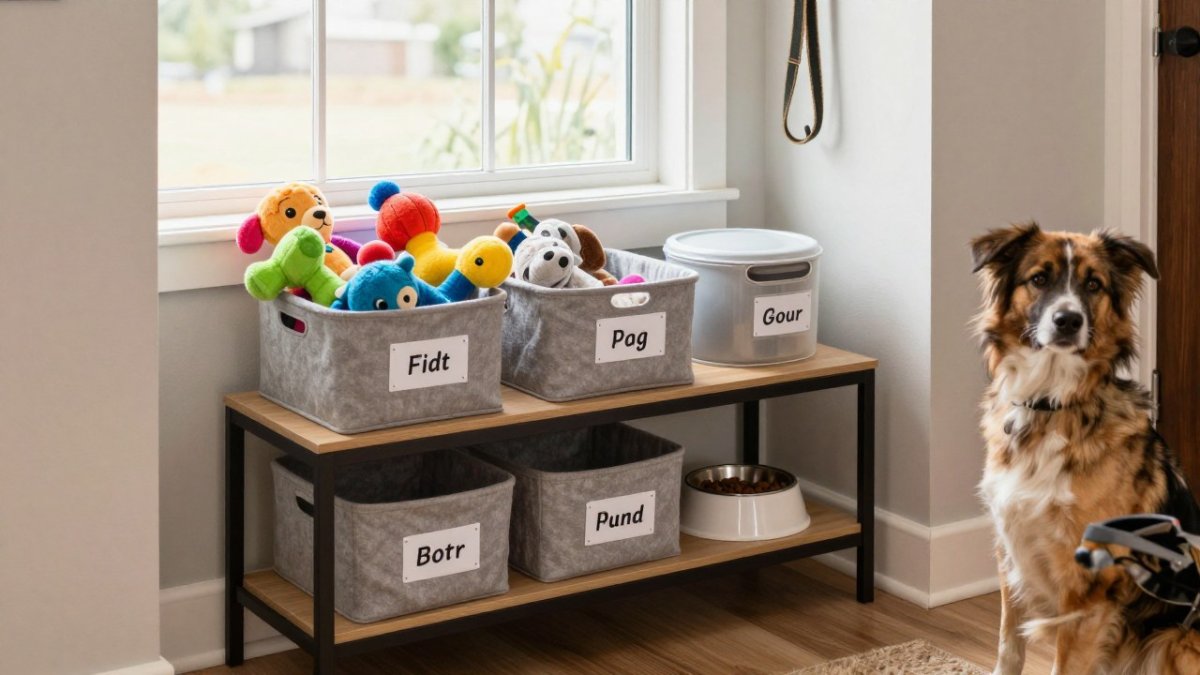
Place the station near the door you actually use for walks. Add a hook for the leash, a small bin for poop bags, and a shelf for treats.
Keeping Food, Treats, and Medications Safe
Food safety matters as much as tidiness. Store dry food in an airtight container, keep the original bag inside it for the batch and expiry details, and place it somewhere cool and dry. Medications belong in a locked or high cabinet, away from children and pets. Keep a simple health file for vaccination records, appointment dates, and medication schedules so you are never searching at the vet's office.
Travel, Seasonal, and Emergency Gear: What to Pack and Where to Store It
Travel, seasonal, and emergency gear is the category most pet owners forget to organize until they need it. A dedicated container for each use case, stored where you can grab it fast, turns a frantic search into a two-minute grab. This is also where organization becomes a safety issue, not just a tidiness one.
Build a Pet Go-Bag That Is Actually Ready
A go-bag is a single bag or small bin that holds everything your pet needs for an overnight trip, a vet emergency, or an evacuation. Pack it once, store it near the door or in the car, and check it twice a year. A practical go-bag contains:
- A spare leash and collar or harness with current ID tags
- A copy of vaccination records and a recent photo of your pet in a waterproof sleeve
- Three to five days of food in a sealed container and a collapsible bowl
Store the bag in a cool, dry spot, not in a hot car or a damp garage. Watch out: food and medications left in a go-bag for months can expire or degrade, so put a dated checklist on the bag and replace food and meds on a set schedule.
Store Seasonal Gear in Labeled Rotation Bins
Seasonal gear, such as cooling mats, winter coats, booties, and holiday toys, does not need to live in your everyday station. Use two labeled bins, one for warm-weather gear and one for cold-weather gear, and swap them at the start of each season. Store the off-season bin on a high shelf or in a closet. Keep a small "retire" bag inside each bin for items that fail inspection, so they leave the house on donation day instead of creeping back into storage.
Keep Travel Gear Separate From Everyday Gear
Day-trip and travel gear works best in its own container so you are not dismantling your everyday station before every outing. A travel bin or backpack can hold a collapsible bowl, a portable water bottle, a leash, waste bags, and a towel. If you use a pet travel backpack with a removable mat or divider, keep the mat and divider in the bag so they do not get lost between trips. A waterproof car seat cover can live in the car rather than the house, removing one bulky item from your storage footprint.


Make Emergency Supplies Visible and Reachable
Emergency supplies fail when they are buried. Store the go-bag and a small emergency kit on a shelf at waist height or near the exit you would actually use, not in a sealed attic box. Keep a one-page emergency card in the bag with your vet's phone number, an emergency clinic number, your pet's microchip number, and a feeding and medication summary.
Run a Twice-Yearly Gear Check
Twice a year, empty the go-bag, the seasonal bins, and the travel container. Replace expired food and medication, check that ID tags are current, confirm the records copy matches your latest vet visit, and remove anything that no longer fits your pet. This check takes about twenty minutes and is the difference between a bag that works and a bag that only looks organized.
Maintenance Routines That Keep Pet Gear Neat and Tidy
A five-minute weekly reset keeps the whole system working. Pick one day, empty the toy bin, wipe down food containers, and return stray items to their labeled homes.
Monthly, check food and treat expiry dates, wash soft toys, and clear out anything broken. Quarterly, re-run the keep, toss, and donate test. These routines prevent clutter from creeping back and keep gear safe and usable.
Shop Pet Storage Essentials at Nexona Mart
Nexona Mart offers a curated selection across home, pet, and lifestyle needs, with secure payment options like PayPal and guest checkout available.
Registered users can track orders and build a wishlist, which helps when planning a full storage setup across several rooms. Product pages include detailed descriptions and specifications.
Frequently Asked Questions
What are some effective ways to organize pet supplies?
Start by grouping items by type: toys, walking gear, food and treats, grooming tools, and paperwork. Use clear storage bins or baskets with labels so every item has a home. Keep daily-use gear like leashes and treats near the door in a pet supply station, and store seasonal or backup items on higher shelves. A dedicated dog supply storage cabinet keeps everything in one place and makes restocking easy.
How can I create a pet supply station at home?
Choose a convenient spot near where you walk your dog, such as an entryway or mudroom. Add a shelf or small cabinet for food and treats, hooks for leashes and harnesses, and a basket for toys. Keep a portable water bottle and poop bags within reach. A pet supply station ideas setup like this saves time and reduces clutter. For smaller spaces, use a rolling cart or over-the-door organizer that can move as needed.
What is the best way to organize dog clothes?
Fold or roll dog clothes and store them in a labeled bin or drawer separate from toys and gear. Use dividers to separate sizes or seasons. If you have limited space, a hanging shoe organizer on the back of a closet door works well for smaller items like sweaters and bandanas. Rotate seasonal clothing to keep the current selection accessible and store off-season pieces in a storage bin.
How can I organize pet gear in a small space?
Use vertical space with shelves or stackable bins, and choose multi-purpose furniture like a storage ottoman that doubles as a toy basket. Over-the-door organizers and under-bed storage containers are renter-friendly options. For walking gear, a wall-mounted hook rack keeps leashes and harnesses off the floor. A collapsible travel backpack can store extra gear and fold flat when not in use, making it ideal for compact homes.
Where should I store pet toys and grooming supplies?
Store toys in a low, accessible basket or bin in the room where your pet plays most. Keep grooming supplies like brushes, nail clippers, and shampoo together in a caddy or drawer near where you groom your pet. Avoid storing grooming items near food to prevent contamination. A labeled container in a bathroom or utility closet works well for grooming tools, while a toy basket in the living area keeps playthings tidy.
The clutter builds quietly until one walk turns into a ten-minute search for a leash. Building a labeled station, running a seasonal audit, and keeping a travel bag ready solves most of it. Nexona Mart can help you get there with a curated range of pet storage and travel essentials, secure payment including PayPal, and guest checkout for a fast start. Get started with Nexona Mart and turn your pet gear into a system that stays tidy.
