
How to Choose a Durable Dog Chew Toy: 7 Factors That Matter
Quick Summary
A durable dog chew toy is one that holds up to how your dog actually chews, not one that lasts forever for every dog. Match its size to your dog's mouth, pick a material suited to your dog's chew style, and inspect it regularly for wear.
- Choose a toy sized to fill your dog's mouth without forcing the jaw wide.
- Rubber tends to chunk, nylon can splinter, silicone can tear, and TPR erodes gradually.
- Press your thumbnail into the toy: no indentation means it may be too hard for teeth.
- Remove any toy at the first sign of its material's typical failure, not at the first hole.
- Replace toys before large pieces break off, since swallowed fragments can cause blockages.
Table of Contents
- Why Durability Depends on Your Dog, Not Just the Toy
- Matching Toy Size to Your Dog's Size and Jaw Strength
- Safe Chew Toys for Dogs: Comparing Rubber, Nylon, Silicone and TPR
- Durable Dog Chew Toys for Small Dogs: Size, Hardness and Tooth Safety
- Dog Chew Toys for Aggressive Chewers: Reading Chew Style and Play Behavior
- Long-Lasting Dog Chews: Inspecting for Wear and Knowing When to Replace
- Choosing Your Next Chew Toy: Set Up Your Shortlist and Supervise the First Sessions
- Frequently Asked Questions
Why Durability Depends on Your Dog, Not Just the Toy
Last Updated: November 19, 2026
A durable dog chew toy is not one that lasts forever for every dog. Durability depends on how hard your dog chews, what the toy is made of, and how it is used. A toy that suits one dog can fail quickly for another.
Bullymake's safety guidance makes the same point. It advises choosing toys that wear down gradually, supervising chewing, and replacing toys before large pieces break off. That advice shifts the question from "Which toy is indestructible?" to "Which toy holds up to how my dog chews?"
Keep one warning in mind. A toy marketed as durable should not be assumed to be indestructible or risk-free. Hard nylon toys can pose tooth-injury risks, and some rubber toys can break apart. Treat durability as a range, not a guarantee.
Matching Toy Size to Your Dog's Size and Jaw Strength
Size matters more than most buyers expect. A toy that is too small can be swallowed, and one that is too large may be too hard for a small mouth to work with comfortably.
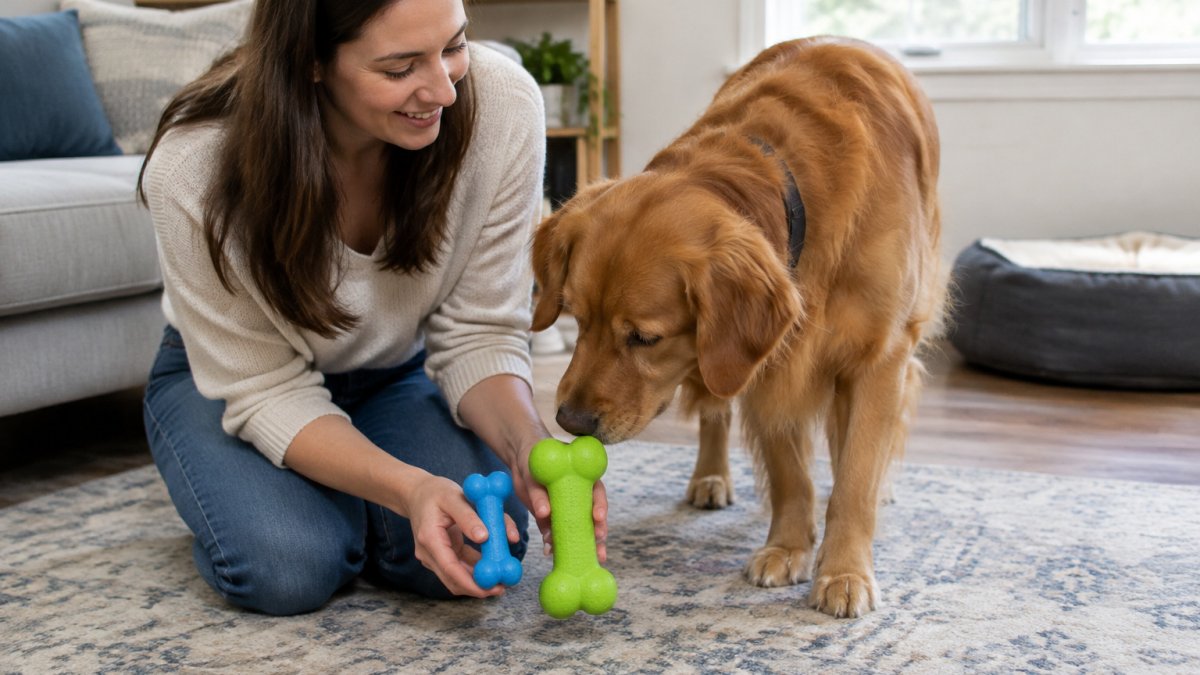
Start with your dog's size and bite strength, then choose a toy that fills the mouth without forcing the jaw wide. Watch how your dog chews for the first few sessions. A dog that shreds toys in minutes needs a different size and material than one that only mouths them.
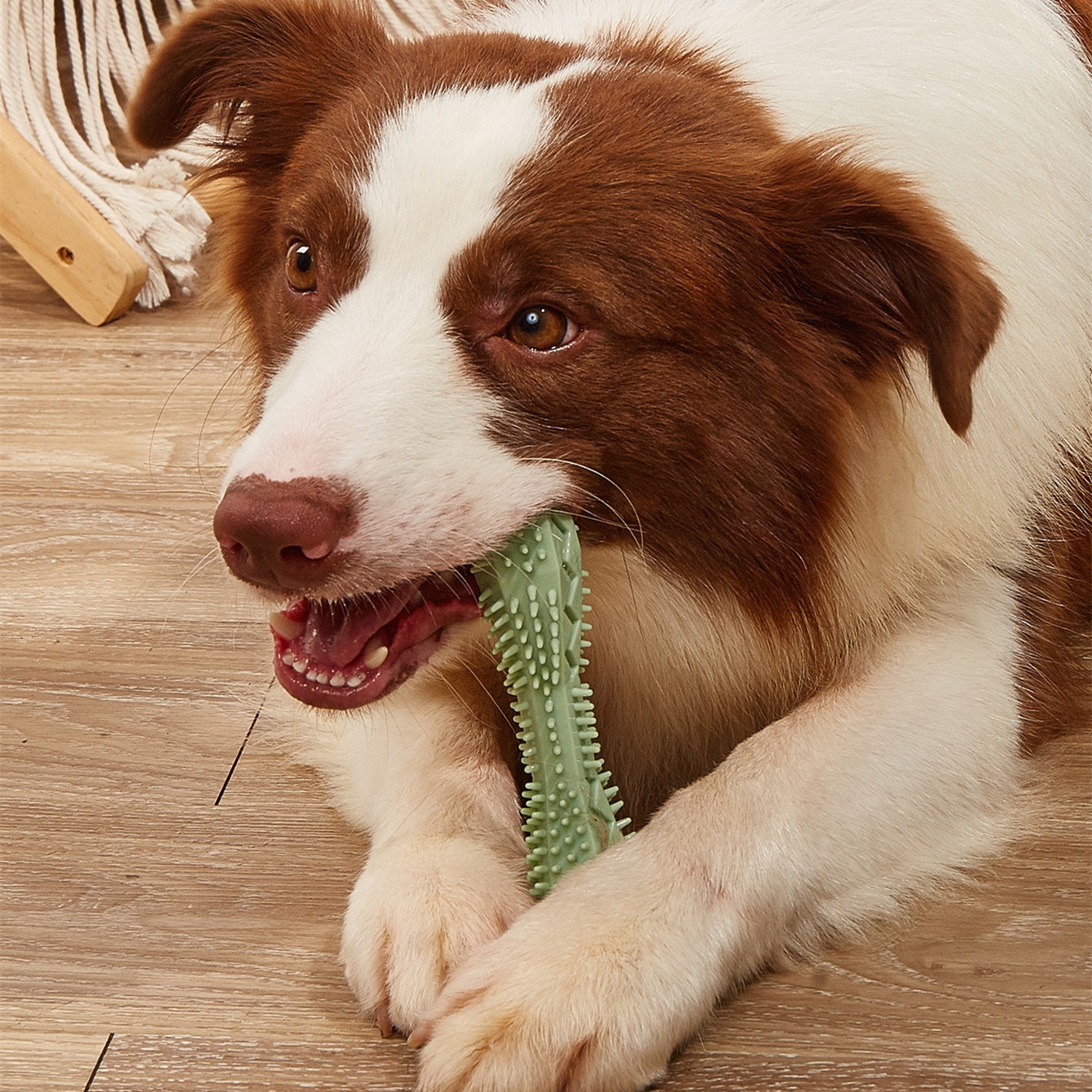
The Dog chewable toy is one option to consider for everyday chewers. Its hexagonal shape and 40g weight are listed in its specifications. Check the size against your dog before you start.
Safe Chew Toys for Dogs: Comparing Rubber, Nylon, Silicone and TPR
Material determines how a toy wears, how it feels against a dog's teeth, and what happens when it fails. Four families dominate the durable-chew market, and each has a distinct failure mode you should recognize before you buy.
Rubber is flexible and grippy, which makes it a good fit for moderate chewers and dogs that like to mouth and carry.
Nylon is the firmest common material. It resists shredding and lasts a long time for power chewers, but its hardness is the trade-off.
Silicone is softer and more elastic than rubber.
TPR (thermoplastic rubber) sits between rubber and silicone. It flexes under pressure, which spreads bite force instead of concentrating it, and it resists cracking better than rigid plastic. The Nexona Mart Dog chewable toy is made from TPR.
A practical tooth-safety test you can do at home
Before you hand over any toy, press your thumbnail into it. If your nail leaves no indentation at all, the toy is harder than most dogs' teeth can safely absorb, and it belongs in the "supervise only, short sessions" category, or back on the shelf. If your nail sinks in easily and the toy feels spongy, it is likely too soft for a determined chewer and will tear.
A second test is the knee test: press the toy against your knee with moderate force. A toy that feels like it could bruise you is probably hard enough to damage a tooth. This is a screening test, not a diagnosis, if your dog has cracked a tooth, chipped enamel, or shows pain when chewing, have a veterinarian assess the mouth before choosing another toy.
What failure looks like by material
- Rubber: pits, tears at seams, chunks pulled from edges.
- Nylon: rough, splintered edges; grooves worn into the surface; small shavings.
- Silicone: nicks, slices, torn flaps.
- TPR: surface gouges, small tears at flex points, gradual erosion rather than sudden breaks.
Match the material to the failure you can tolerate. A toy that erodes gradually gives you warning; a toy that chunks or splinters can go from intact to ingested in one session. Whatever the material, check the toy before and after every chew session, and remove it at the first sign of the failure mode above.
The four common chew-toy materials each fail in a different way, so it helps to know what to watch for before you buy.
| Material | Typical failure | What to watch for |
|---|---|---|
| Rubber | Chunking | Pitting, tears at seams or handles |
| Nylon | Splintering | Rough edges, grooves, shavings; hard enough to risk tooth fractures |
| Silicone | Slicing or tearing | Nicks and torn flaps, which can be an ingestion risk |
| TPR | Gradual erosion | Surface gouges and small tears at flex points |
Durable Dog Chew Toys for Small Dogs: Size, Hardness and Tooth Safety
Small dogs need a toy that fits their mouth and does not break their teeth. Very hard toys can cause tooth fractures, even when the toy looks tough.
Use a simple test: press the toy with your thumb. If it feels rock-hard and does not give at all, it may be too hard for a small dog to chew safely. Choose something with some flex and a surface your dog can grip.
Watch small dogs closely. Remove any toy that splinters, cracks or loses pieces.
Dog Chew Toys for Aggressive Chewers: Reading Chew Style and Play Behavior
"Aggressive chewer" is a label, not a diagnosis. Two dogs that destroy toys at the same rate can need very different toys, because they destroy them in different ways. Before you shop, sort your dog into a chew style using the behaviors below.
Step 1: Identify the chew style
- The crusher bites down hard in one spot and holds. Crushers concentrate force, so they need a toy with give that spreads pressure, flexible TPR or rubber, and they are the dogs most at risk from rock-hard nylon.
- The shredder works edges and seams, pulling and tearing. Shredders need toys with no thin seams, no handles, and no hollow cavities they can collapse.
- The gnawer works steadily for long periods without destroying the toy. Gnawers can handle firmer materials, but they accumulate wear in one area, so rotate toys to spread the load.
- The biter-and-runner chews in short bursts, then carries or tosses the toy. This dog needs a toy that survives impact as well as bite, and one sized so it cannot be swallowed when dropped.
Step 2: Add size, age, and play behavior
Size and age modify the choice. A small dog with a crusher style still needs a toy small enough to grip but not small enough to swallow, a common mistake is sizing down for a small mouth until the toy becomes a choking hazard. Puppies and seniors need softer materials regardless of enthusiasm, because their teeth and jaws are less resilient. Dogs that chew toys as part of fetch or tug need a toy rated for that play, not just for chewing.
Step 3: Match the toy to the failure you can manage
A crusher is best served by a toy that erodes gradually, so you get warning before a piece comes off. A shredder is best served by a solid, seam-free toy that resists edge-tearing. If your dog's style is "destroy in minutes," no chew toy is a substitute for supervision and short sessions, the toy is a management tool, not a babysitter.
If your dog swallows a piece
This is the scenario most buying guides skip. If your dog swallows a fragment, note the material, the approximate size, and the time. Small, smooth fragments often pass, but sharp nylon shards, rubber chunks, and silicone flaps can cause an obstruction. A common pattern is that symptoms, vomiting, drooling, refusing food, abdominal discomfort, appear hours later, not immediately. Contact your veterinarian or an emergency clinic for guidance rather than waiting for symptoms, and do not induce vomiting unless a professional tells you to.
Supervision rules for power chewers
Take the toy away at the first sign of the failure mode for its material, not at the first visible hole. Rotate two or three toys so no single toy takes all the wear, and inspect before and after every session. If your dog is a heavy chewer, read Durable Pet Toys for Aggressive Chewers: 2026 Guide for a deeper look at tougher options.
Long-Lasting Dog Chews: Inspecting for Wear and Knowing When to Replace
Inspect every chew toy regularly. Look for cracks, thin spots, loose pieces and any surface that has started to peel or splinter.
Replace a toy when it has visible damage, when parts can break off, or when your dog can pull off chunks. Do not wait for a complete break. Bullymake advises replacing toys before large pieces come off, because a swallowed piece can cause blockages.
Clean toys regularly too. Washable toys stay hygienic longer and are easier to check for damage.
Choosing Your Next Chew Toy: Set Up Your Shortlist and Supervise the First Sessions
Start with three criteria: size for your dog, a material that suits your dog's chewing style, and a surface that can be inspected easily. Put two or three options on a shortlist, then supervise the first few sessions.
Before you buy, check the return process. Our team at Nexona Mart recommends reading the How to Compare Online Pet Store Return Policies guide, so you know what happens if the toy does not suit your dog. You can also review How to Check Pet Product Quality Before You Buy in 2026 to confirm what to look for in a product listing.
If your dog is a heavy chewer, read Durable Pet Toys for Aggressive Chewers: 2026 Guide for a deeper look at tougher options.
Once you have chosen a toy, watch the first sessions closely. Note how quickly it wears, whether pieces come loose, and whether your dog seems comfortable. Replace the toy at the first sign of serious damage, and keep your shortlist ready for the next one.
Frequently Asked Questions
What is the most durable chew toy for a dog?
No single toy is durable for every dog. Durability depends on the dog's size, jaw strength and chewing intensity. Dense, one-piece rubber or TPR toys sized so the dog cannot fit most of the toy into its mouth generally hold up best for moderate chewers. Aggressive chewers need firmer, larger designs and close supervision. Check any toy for cracks, splintering or loose pieces before each session, and replace it as soon as damage appears, because even tough toys can break into swallowable or tooth-damaging fragments.
What kind of dog chew lasts the longest?
Chews that wear down gradually tend to last longer than those that break into pieces. Solid, dense rubber and TPR toys with a tough outer surface resist tooth marks well, and some hard nylon toys last a long time with power chewers. Edible chews last until consumed. Longevity also depends on how often the dog chews and whether the toy is supervised. A long-lasting chew that a dog can splinter is still a hazard, so judge lifespan by condition, not by the label alone.
How do I choose the right chew toy size for my dog?
The toy should be too large to fit fully into the dog's mouth and large enough that it cannot be swallowed whole. For small dogs, look for compact toys that still fill the mouth comfortably. Medium and large dogs need bigger, denser toys that match their jaw strength. Puppies need softer, flexible toys suited to teething, and older dogs with worn teeth may need gentler options. When in doubt, pick a larger size and watch the first few sessions.
How often should I inspect or replace a dog chew toy?
Inspect chew toys at least once a week, and check them before every session with a strong chewer. Look for cracks, splinters, flattened or missing surfaces, loose squeakers or eyes, and any pieces that come away easily. Remove a toy as soon as it shows damage, even if it still looks mostly intact. Cleaning with warm water and mild soap helps remove bacteria and residue, and a toy that smells sour or feels sticky should be washed or retired.
